Beginner's Guide to Styling Houseplants in Low-Light Rooms
A dim corner does not have to stay empty. Many houseplants come from forest floors, where they spend their lives in dappled shade, and a handful of them settle into a low-light living room without much drama. The trick is not propping up sun-loving plants and hoping for the best. It is choosing the right plants, then arranging them — and the room around them — so the space reads as green, layered and brighter than it actually is.
Read the Light Before You Buy Anything
Spend one day watching the room instead of guessing. Where does daylight land at nine in the morning? Where is it at three in the afternoon? A room that feels gloomy over breakfast can be surprisingly bright by mid-afternoon, and a corner that looks fine in summer may turn into a cave by December.
Try this test. Hold your hand about a foot above a sheet of white paper in the exact spot where the plant will sit. Crisp-edged shadow means bright light. Soft, fuzzy edges mean medium. If you can barely find a shadow at all, you are working with low light — and that is useful information, not a failure.
Distance matters more than direction. A plant half a metre back from a north-facing window receives far less light than one sitting on the sill, and a plant tucked two metres into the room may be getting less light than it would in a bright hallway. Corners are the darkest spots in any room, because they catch light from one side only.
Plants That Tolerate Shade Without Looking Sorry About It
Some plants merely survive low light; others genuinely cope with it. These are the ones worth starting with:
- Snake plant — upright, architectural, and forgiving of neglect.
- ZZ plant — glossy leaves, thick roots that store water, tolerant of dim corners.
- Pothos and heartleaf philodendron — trailing vines that look good on a shelf or in a hanging pot.
- Peace lily — dark green leaves and occasional white blooms; droops visibly when thirsty.
- Cast iron plant — slow, wide-leaved and famously hard to kill.
- Chinese evergreen — patterned foliage in greens, silvers and pinks.
- Spider plant and parlor palm — lighter textures that break up a wall of broad leaves.
Skip succulents, cacti, citrus, most culinary herbs and anything with variegated leaves so pale they look almost white. Plants with heavy variegation need more light than their solid-green relatives, because the green tissue is what makes the food.
Buy fewer, larger plants. One substantial plant makes a stronger impression than six thin, stretching ones, and it is easier to keep healthy. If a plant has been sitting in a dark shop aisle, give it two or three weeks near a bright window before moving it into the dim room you have in mind.
Arrange by Height, Not by Habit
Most low-light rooms look flat because everything sits at the same level. Build the arrangement the way you would build a photograph: something tall, something medium, something small, and a little overlap between them.
- Put the tallest plant at the back or in the corner, where it reads as a background layer.
- Set a mid-height plant on a stool, a crate or a stack of books so its leaves sit just below the tall one's.
- Place a low, spreading plant in front — a peace lily or spider plant works well.
- Add one trailing plant above eye level, on a shelf or in a hanging pot, to pull the eye upward.
- Step back to the doorway, which is how most people will see the room, and adjust anything that disappears.
Work in odd numbers and vary leaf shapes: spiky next to round, matte next to glossy. Keep floor pots out of walkways, and leave a little breathing room between plants. Crowding them together in the dark hides the shapes you paid for.
Pots Do Half the Lighting Work
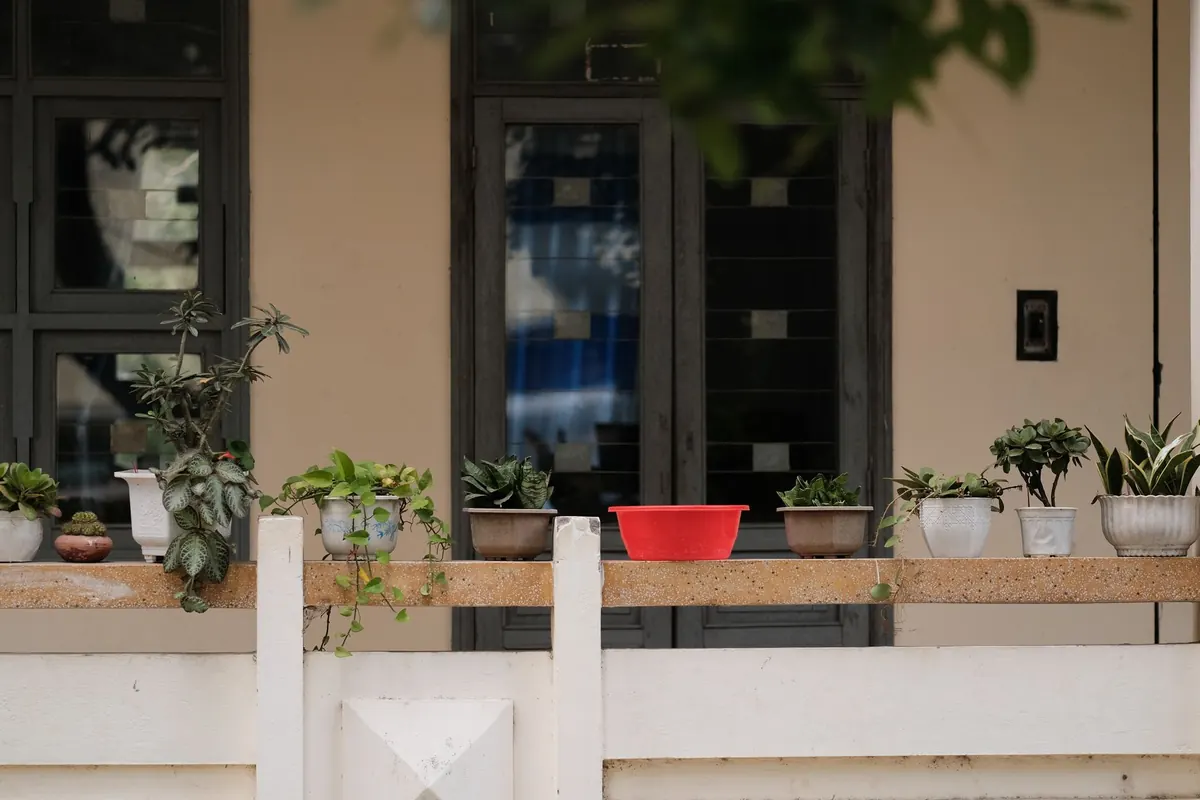
In a dim room, pale pots act like small reflectors. Matte white, cream, pale grey, soft sand and light terracotta bounce light back toward the leaves. Heavy black or dark brown pots absorb what little light there is, and the plant above them can end up looking like a silhouette.
Raise pots onto stands, feet or a low bench so light reaches the lower leaves instead of being blocked by the rim. Look for saucers or liners that match, and keep the whole arrangement to two or three pot colours. A tight palette makes a low-light corner look deliberate rather than cluttered.
Scale matters too. A pot roughly a third to a half the height of the plant usually looks right. Repot only when roots are circling the drainage holes; a plant in low light grows slowly and does not need extra soil.
Mirrors and Other Ways to Borrow Light
A mirror is the cheapest way to add light to a room without touching the wiring. Lean a tall one against the wall opposite or beside the window, angled so it catches daylight and throws it across the plants. A small mirror tucked behind a plant doubles its silhouette, which reads as more greenery from across the room.
One good mirror beats a wall of them, and it should never bounce a lamp directly into a chair or a television screen. If the reflection lands on something ugly, move the mirror rather than covering it.
Small moves that brighten a dim room
- Clean the windows and pull back heavy curtains during the day.
- Swap a thick valance or dark drape for a sheer layer.
- Keep walls and ceilings pale; a light wall behind dark leaves makes them stand out.
- Add a warm-white floor lamp on a timer for evenings, aimed at the plants rather than at the ceiling.
- Include one glossy surface — a ceramic tray, a glass table — to catch whatever light exists.
Caring for Plants That Live in the Shade
Low light slows everything down, including water use. Check the top couple of centimetres of soil with your finger before watering, and expect to water far less often than you would in a sunny room. Overwatering is the most common way indoor plants die, and shade makes it worse.
Turn each plant a quarter turn every week or so, so it does not lean permanently toward the window. Wipe the leaves with a damp cloth once a month; dust blocks the light the plant is already short of. Hold off on fertiliser through winter, and expect new growth to come in slowly.
If a plant develops long, pale gaps between leaves and thin, reaching stems, it is stretching for light. Move it closer to the window or add a lamp. If a plant keeps declining despite careful watering, treat light as the prime suspect rather than reaching for more water.
One honest note: a room with no window at all will not support plants indefinitely. Rotate a few in from a brighter space every couple of weeks and swap them back.
Give It a Month, Then Adjust
Start with three plants, not ten. Choose one tall statement plant, one mid-height filler and one trailing vine, and live with them for a month before buying anything else. Watch which leaves turn toward the window, which pots get lost against the wall, and where the arrangement feels heavy.
Then make one change: raise a pot, swap a dark container for a pale one, or move the mirror a metre to the left. Low-light styling is mostly a matter of small adjustments made patiently — and of choosing plants that were never expecting full sun in the first place.

Beginner's Guide to Slow Travel in Small Coastal Towns
A practical guide to slow travel in small coastal towns: how to choose a base, stay longer, spend locally,...

Checklist: Packing a Carry-On for a Weekend City Break in Shoulder Season
A practical carry-on packing list and three-layer strategy for a spring or autumn city break, so you can...
About Us