The House Always Wins? Not If You Understand Variance
Every gambler has heard the phrase "the house always wins." It's technically true over an infinite timeline, but it's also the most misleading cliché in the business. Casinos and sportsbooks don't beat you because they cheat; they beat you because they understand math that most players ignore. The margin isn't some dark secret—it's published, predictable, and in some games, surprisingly small. The realedge for a player isn't a lucky slot machine or a hot streak. It's understanding variance, house edge, and how to pick games where your money lasts long enough for luck to actually matter.
House Edge Is Not the Same Across the Floor
If you walk into any casino and play whatever looks fun, you're probably giving away between 0.5% and 15% of every wager over time. That range is enormous. Two players can walk in with the same bankroll, play for the same number of hours, and one leaves broke while the other breaks even—because one chose blackjack with basic strategy and the other played keno.
Here's a rough breakdown of common games and their typical house edges:
- Blackjack (with basic strategy): 0.5%–1%
- Baccarat (banker bet): 1.06%
- Craps (pass/don't pass with odds): As low as 0.1% with full odds
- European roulette: 2.7%
- American roulette: 5.26%
- Video poker (9/6 Jacks or Better): 0.46% with perfect play
- Slots: 2%–15%, often unpublished
- Keno: 25%–35%
That last one should terrify you. American roulette's extra zero doubles the house edge of the European version for one simple reason: an extra pocket. That single alteration is why serious players look for single-zero wheels or refuse to touch the game at all. Going further, finding a table where the dealer's rule on baccarat ties or the craps table's odds bet is compounded can mean tens of thousands over a year's play. slot 5000 offers a practical breakdown of the topic.
Slots Are Not Just Random—They're Programmed
Modern slot machines are not physical reels; they're computers with virtual reels. The spinning image is theater. What matters is the RTP (Return to Player) percentage baked into the chip, typically somewhere between 85% and 97%. A 94% RTP slot returns, on average, $94 for every $100 wagered—but over millions of spins, not a single session.
This is where variance matters more than edge. A high-volatility slot might pay 5,000x your bet once every 100,000 spins, but bleed you dry in the meantime if your bankroll can't survive the dry spell. A low-volatility slot pays small amounts frequently, keeping you alive but rarely producing the big win people chase. Neither is better—they're designed for different bankrolls and different psychological profiles.
If a machine advertises 96% RTP and you play $2 spins for two hours (roughly 600 spins), your expected loss is about $48. But expected loss isn't actual loss. Standard deviation on those spins might be in the hundreds. That's not a bug; that's statistics doing what statistics do.
Poker Is the One Game Where Skill Actually Beats the House
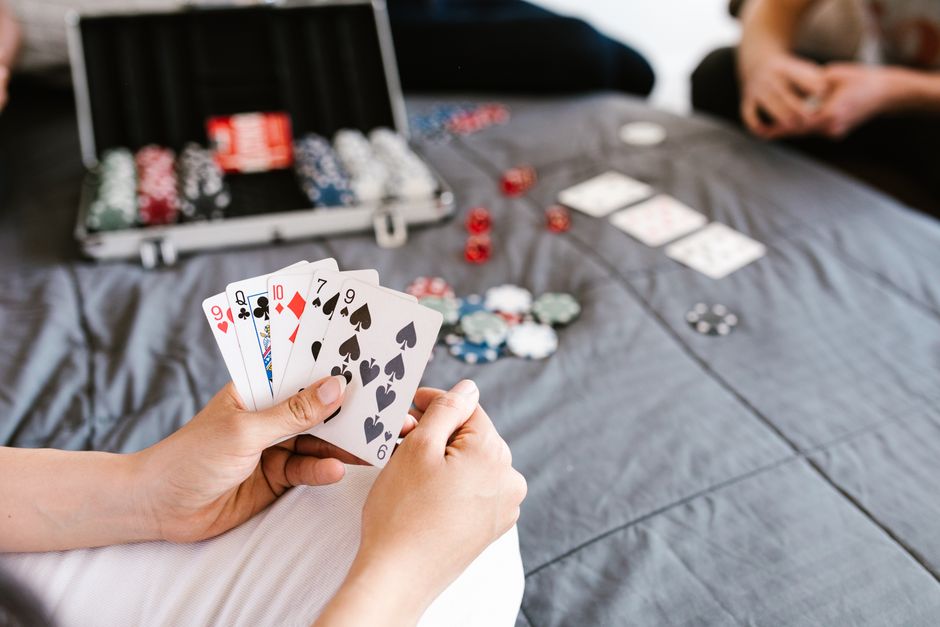
Poker flips the entire dynamic. There's no house edge on the bets—you're playing against other players. The casino takes a rake, usually 5% to 10% of each pot up to a cap, but the better player can walk away up with a consistent profit over time.
Online poker rooms usually charge a similar rake, but the difference is that you're often playing against weaker opponents across a larger pool. The trade-off is that online play moves faster and you can multi-table, which means the rake hits more hands per hour.
Here's where most players go wrong: they treat poker like slots. They chase draws without pot odds, play too many hands, and blame bad luck on a river card. Winning poker is boring, methodical, and built on:
- Position: Playing fewer hands from early seats and more from the button.
- Pot odds: Calling only when the math justifies the price.
- Opponent profiling: Adjusting your play based on who's a nit and who's a maniac.
- Bankroll management: Never sitting with more than 5% of your roll in a cash game.
A player who masters just those four fundamentals will beat 80% of the field at low stakes. The rake takes a bite, but skill overcomes it. That's the opposite of every other game in the building.
Sports Betting: The Line Is the Product
Sportsbooks make money on the vig, or juice—typically -110 on both sides of a spread, meaning you must risk $110 to win $100. That 10-cent line translates to about a 4.5% hold for the book if action is balanced. It's not as brutal as roulette, but it's far less forgiving than blackjack.
The modern betting boom has birthed same-game parlays, player props, and micro-bets that inflate the hold dramatically. A four-leg parlay can have a house edge north of 20%, because the book multiplies its margins on each leg. Sportsbooks heavily promote parlays because that's where the profit lives, not on the standard point spread.
The sharpest bettors hunt for line discrepancies between books, take advantage of boosted odds promotions, and avoid parlays unless the math is unusually generous. They don't bet with their heart, and they certainly don't chase losses after a bad beat on Monday Night Football.
Bankroll Management Is the Only Free Lunch
The single biggest difference between a hobbyist and a sharp isn't pick rate—it's bankroll management. A 55% win rate sounds amazing, but if you're betting 20% of your roll on each play, one losing streak will end your career. A 52% win rate with 1%–2% unit sizing can produce steady profit for years.
Unit sizing works across every game:
- If your bankroll is $1,000, a $10 bet is a 1% unit. That's your standard.
- Never risk more than 2% on a single sports bet or poker buy-in.
- Set loss limits before you sit down—and walk away when you hit them.
- Track results in a spreadsheet. Feelings lie; numbers don't.
Most losses aren't from bad luck. They're from tilt—emotional betting after a frustrating session. The gambler who controls tilt and sizing will consistently outlast the one who plays hunches and celebrates small wins by doubling down.
The Bottom Line for Anyone Navigating iGaming in 2025
Casino games are entertainment with a built-in tax. Sports betting is a market with inefficiencies that a small percentage of bettors can exploit. Poker is the rare competitive game where skill actually pays. Slots and keno are pure recreation; if your goal is profit, stay away. If your goal is a night out, set a budget you're happy to lose, and enjoy the ride.
The house edge is not negotiable, but it's not the only variable you control. You control which games you sit at, how long you stay, how much you risk per hand, and whether you actually study the games you play. Those choices, compounded over hundreds of sessions, matter more than any single hot streak or bad beat. Treat the math seriously, respect variance, and you'll be one of the few players who walks away with more than a story.

How to Fund a Device Lending Library at Your School
The homework gap doesn't announce itself. It shows up as the kid who turns in handwritten essays while...
From Slot Spins to River Bluffs: A Realistic Guide to iGaming
Twenty years ago, if you wanted to play blackjack or bet on a football match, you had to physically go...
About Us